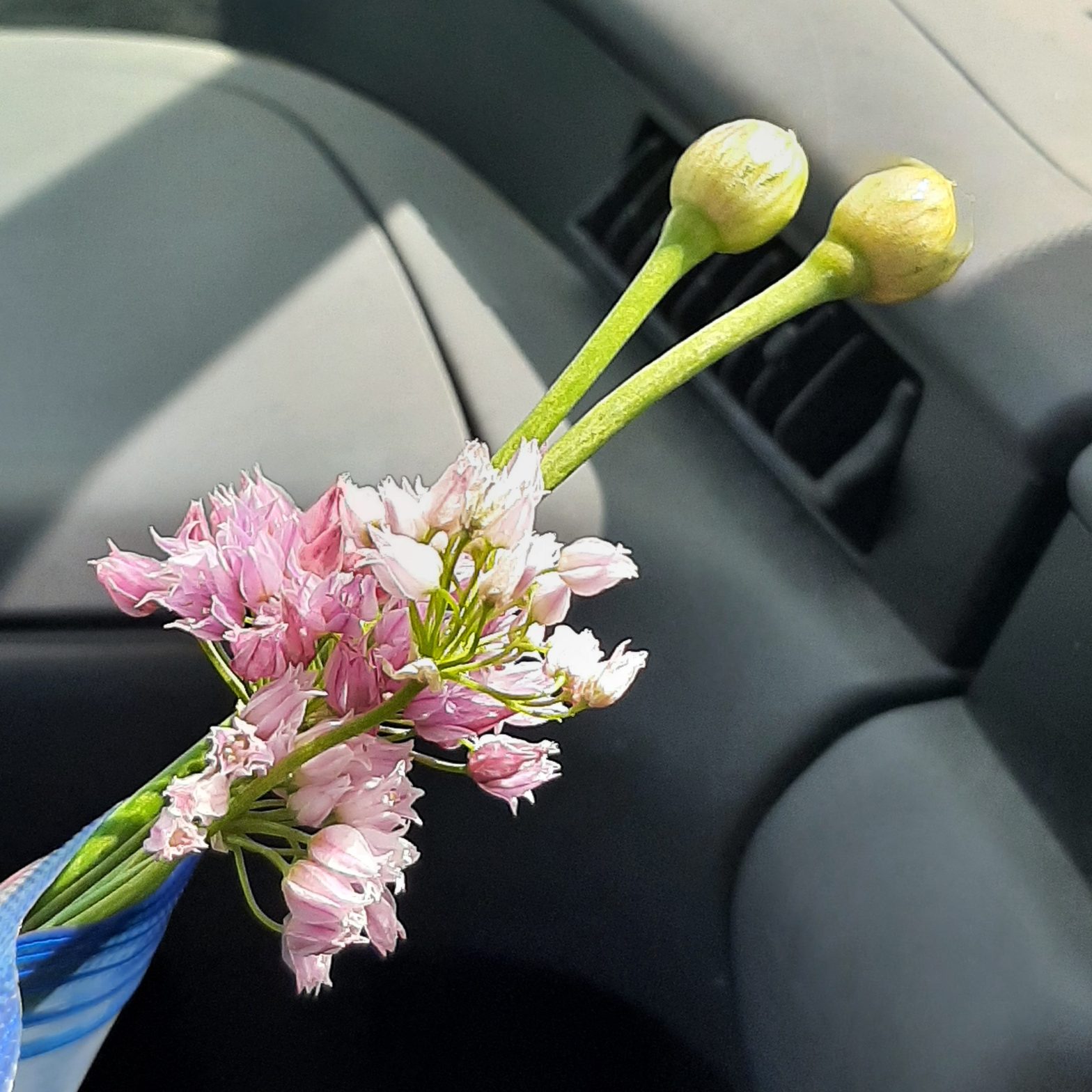
We were up in the Spokane area in the spring of 2022 for my youngest son’s graduation from Upper Columbia Academy. One of my friends from the years I attended the same high school lives nearby and we often stay with her family.
On our previous visit to their place, I waxed poetic about perennial vegetables and edible “weeds,” my “Grandpa’s Pasture Garden” project and my longing to find wild onions to transplant. She mentioned that they had some wildflowers/weeds on their acreage in the spring that smelled like onions….
(Perhaps you’ve heard the saying, “If it looks like an onion AND it smells like an onion, it IS an onion”?) I knew her “weeds” had to be what I was looking for; the forager in me wanted desperately to be there at the right time to collect some.
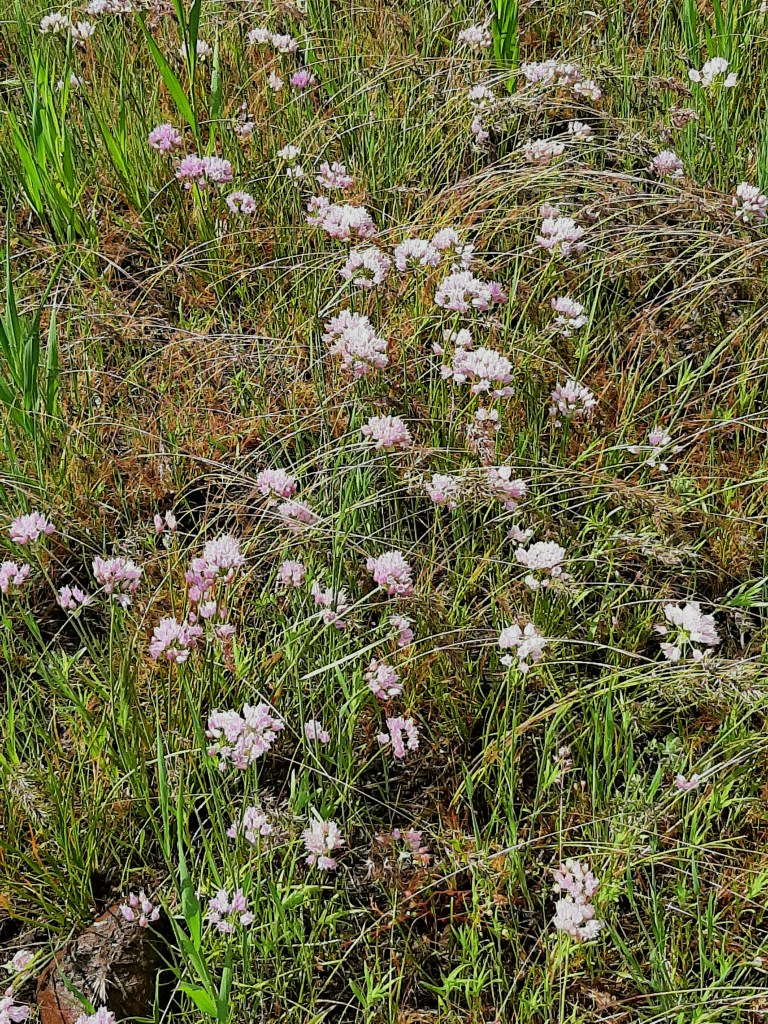
Imagine my thrills when we drove up their driveway that spring to see huge swaths of whitish-pink, chive-looking flowers blanketing their acreage. I checked right away, and the flowers smelled onion-y 🥳
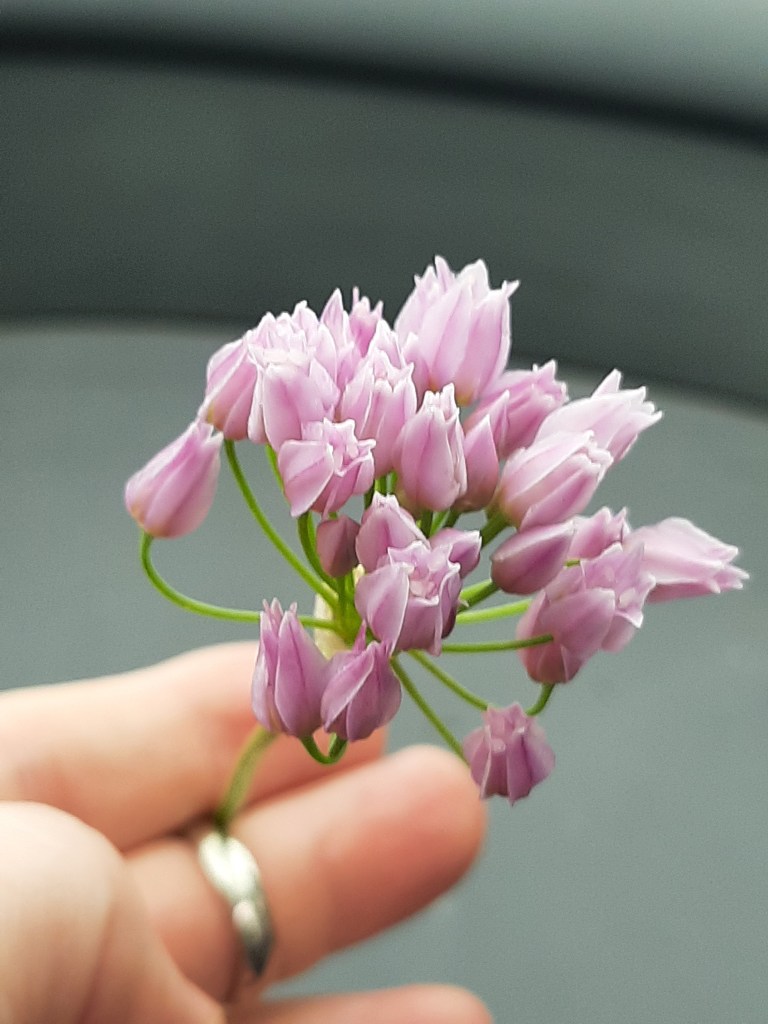
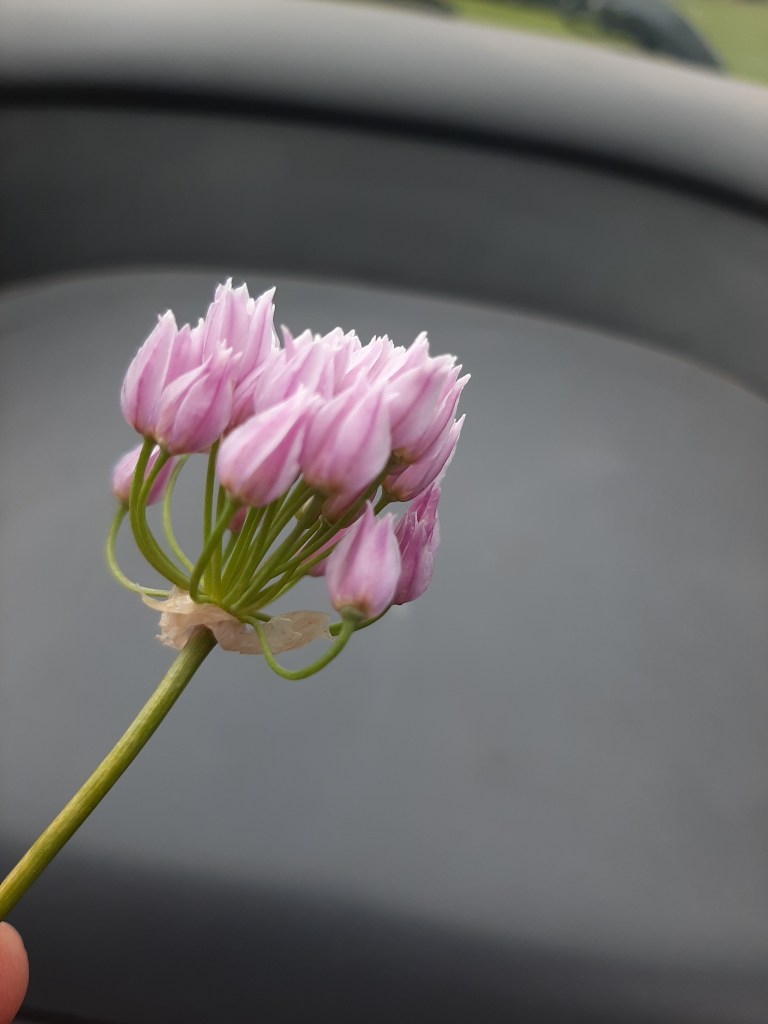
When I went out graduation morning to dig up enough to hopefully start a patch in my garden at home, in addition to the flowering onions, there were scapes with unopened bracts that appeared to belong to another type of wild onion.
Yup. I did several happy dances….
By the time I collected the first of several 8-inch diameter clumps of the first wild onion and reduced the clay and moss clinging to them, my hands were coated with sticky clay. Keeping photographic records is an integral part of my gardening and foraging hobbies, but with those nasty hands, there was no way I was touching my phone to record the process as I would have liked.
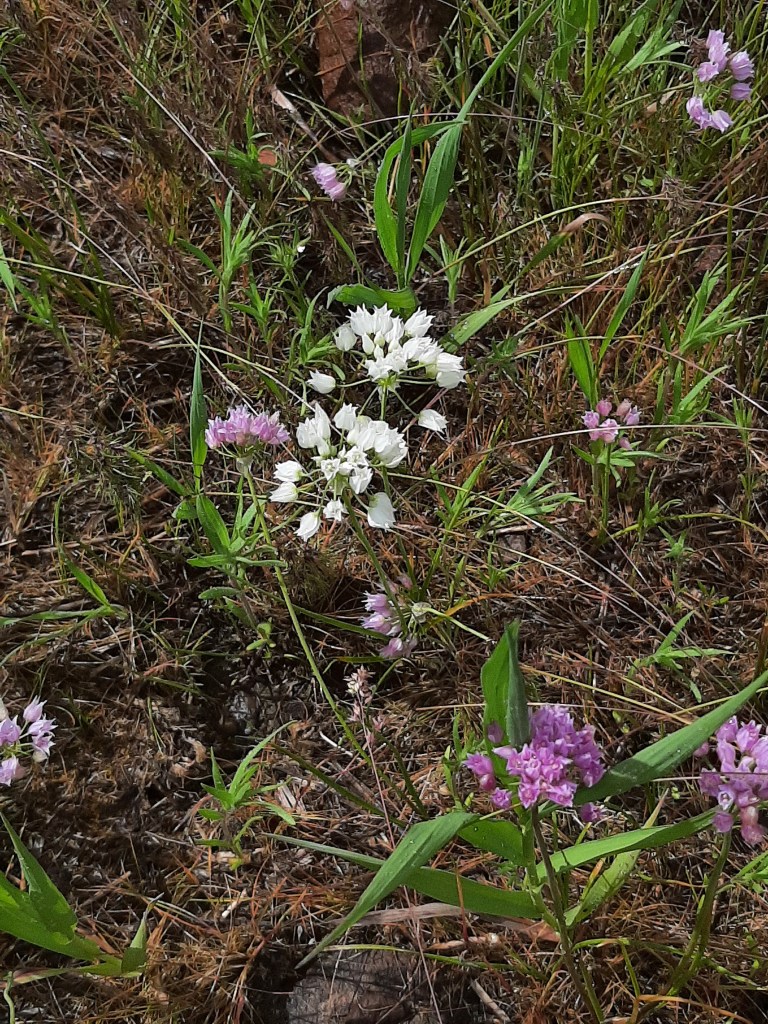
That first variety grew in clumps in the cracks and crevices between the rocks, sometimes having almost no soil but being protected by a several- inch layer of moss. A majority of the bulbs were elongated with a flattened side. Each of the onions was surrounded by a thick, burlappy wrapping, both separately and as collections of bulbs. It seemed clear from the way the wrapping held the clumps of bulbs together that they propagate by bulb division as well as by seed. Only a few of the flowers were white. The rest were medium and light pink.
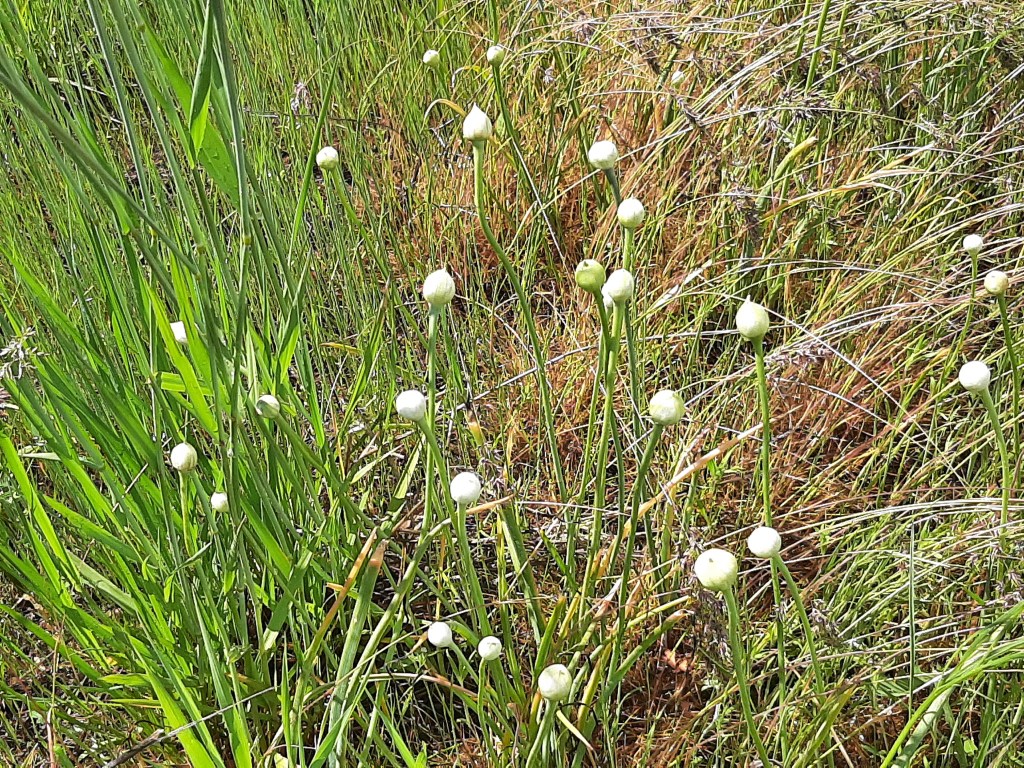
Then I slipped and stumbled through the tall grass camouflaging the rocks in the clay on my way to gather a few of the onions with unopened bracts. They were growing in less-rocky areas as single spherical bulbs with dark pink to white skins without the burlap-ish wrap. I had to dig a lot deeper to find the bulbs, and it was challenging not to lose the tinier bulbs in around the larger ones as I collected specimens. Although my friend told me I could take as many as I wanted, I was careful to space out my collection and to leave some of the smaller bulbs to fill in for what I’d taken.
As I was digging up the second variety of wild onion, I noticed a scape of bright blue flowers further down along her son’s dirt bike path. I was quite sure it was camas, and wanted desperately to check and perhaps collect one bulb. But it was soggy out there, my flip-flops weren’t doing well on the rocks and slick clay, and I needed to get cleaned up and ready to attend graduation. Maybe next time.
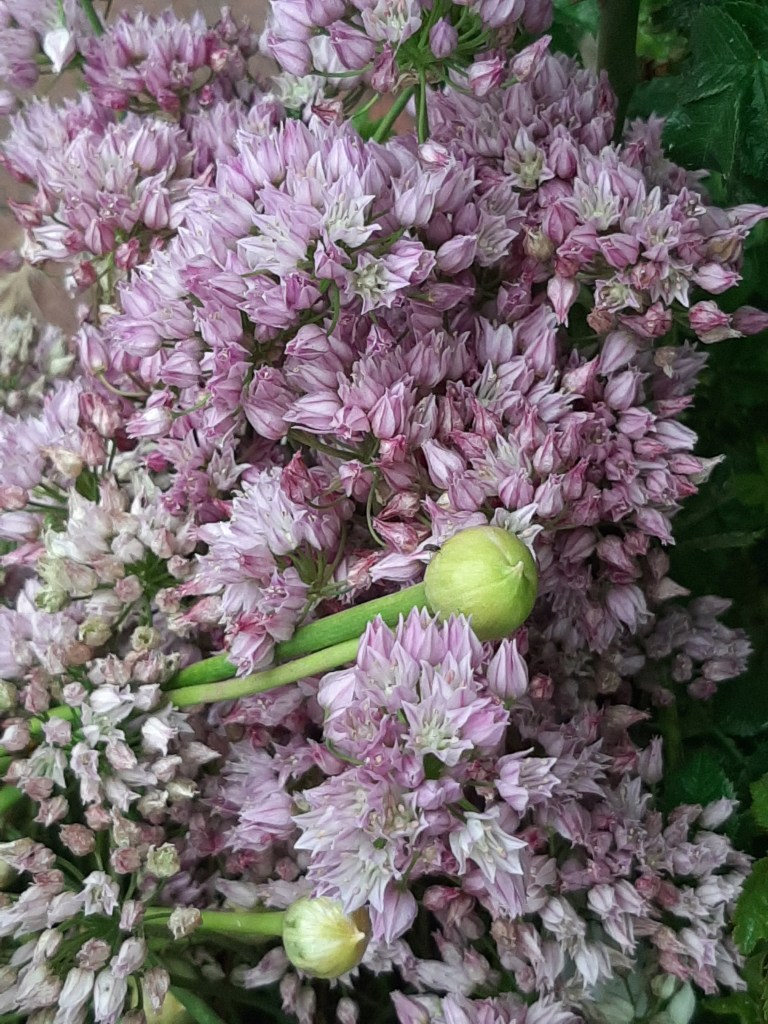
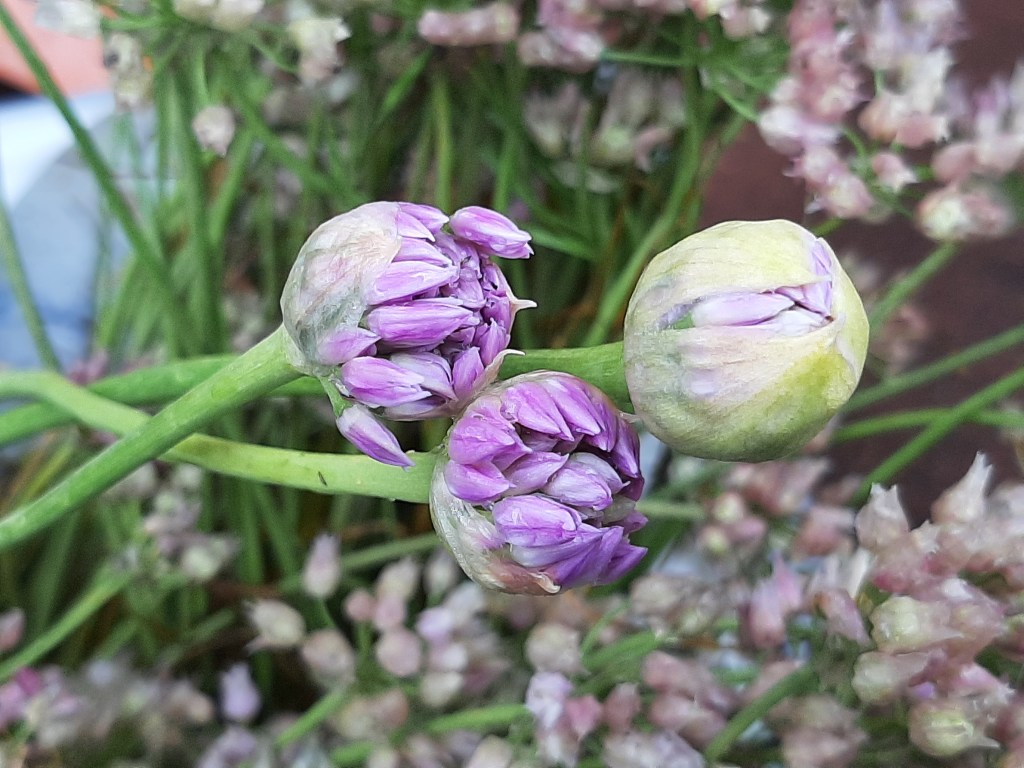
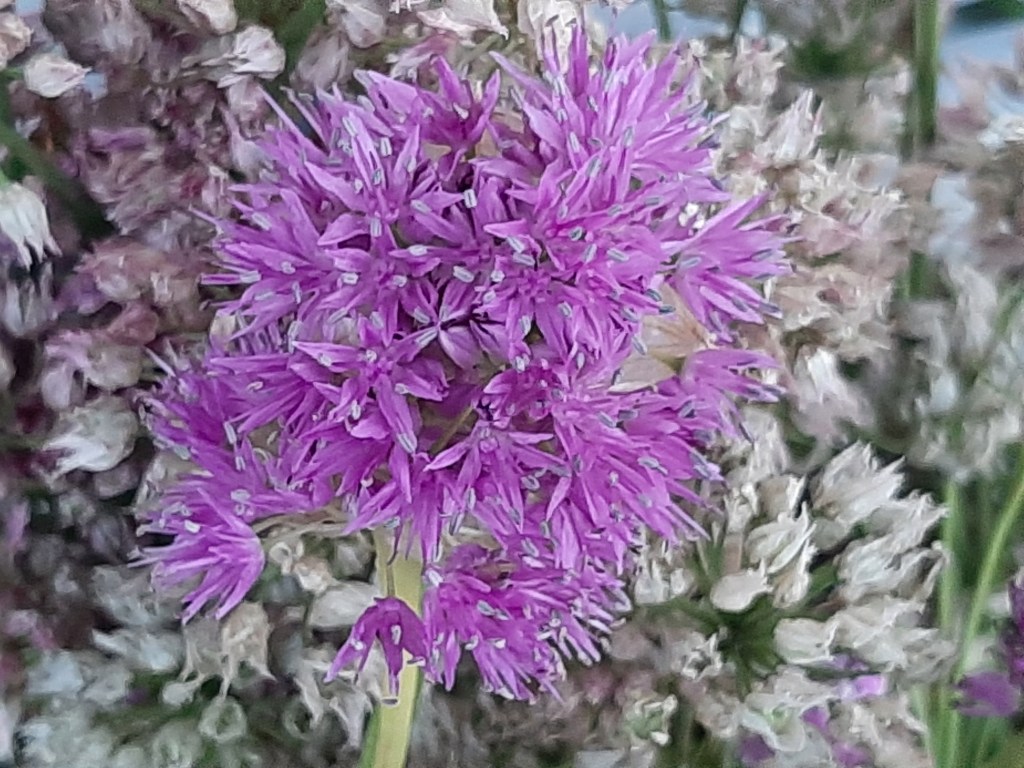
The onion plants survived the trip home and about a month in a bussing tub with nothing more than residual clay soil and a consistent, small amount of water. During that time, the second variety flowered a much more vivid fuchsia, and both set some seed.
From what I can tell, the onions with lighter pink and white flowers are Geyer’s onions (allium geyeri), and the ones with fuchsia flowers are Columbia onions (allium douglasii var. columbianum). The process of collection and identification thrilled my soul!
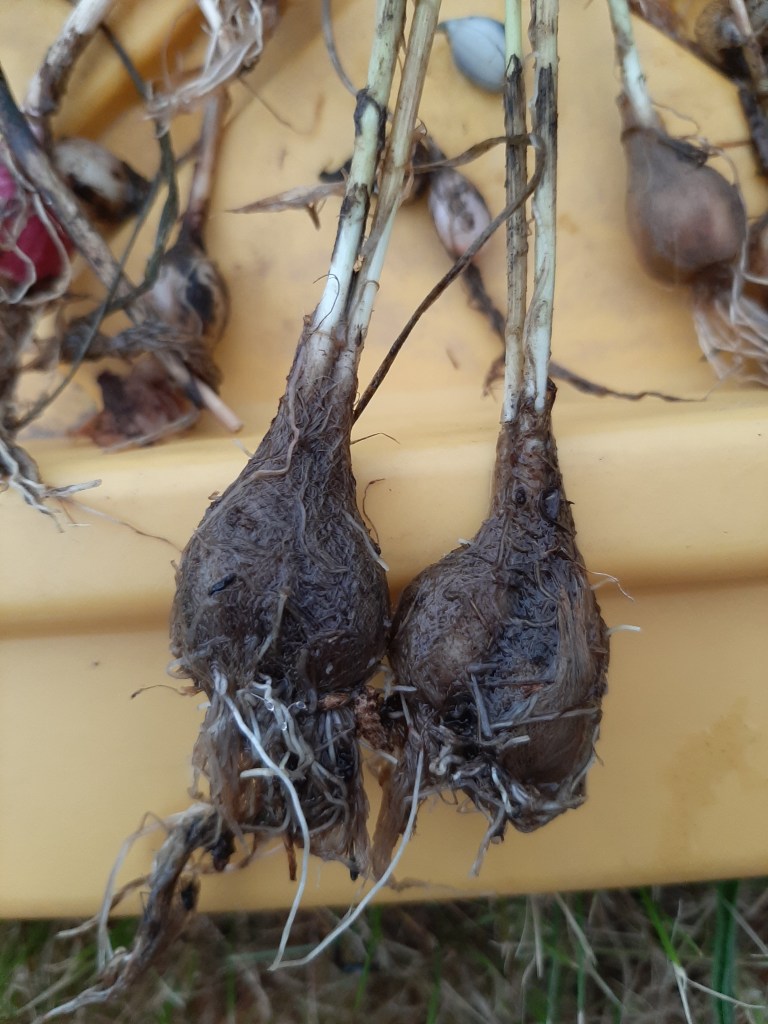
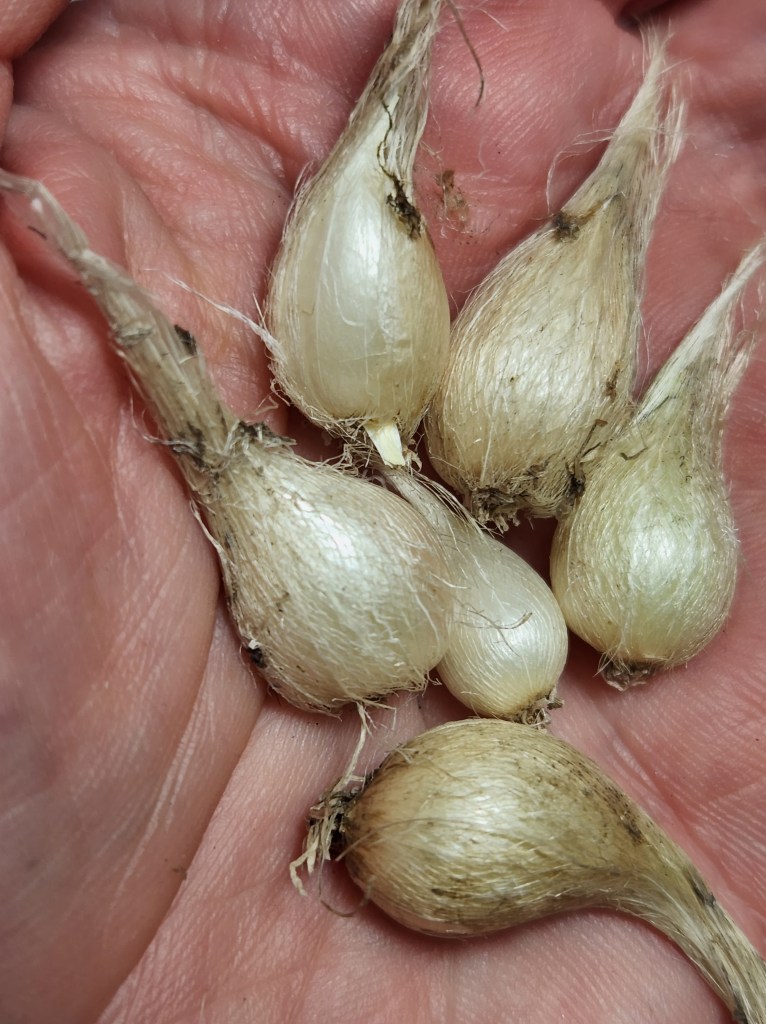
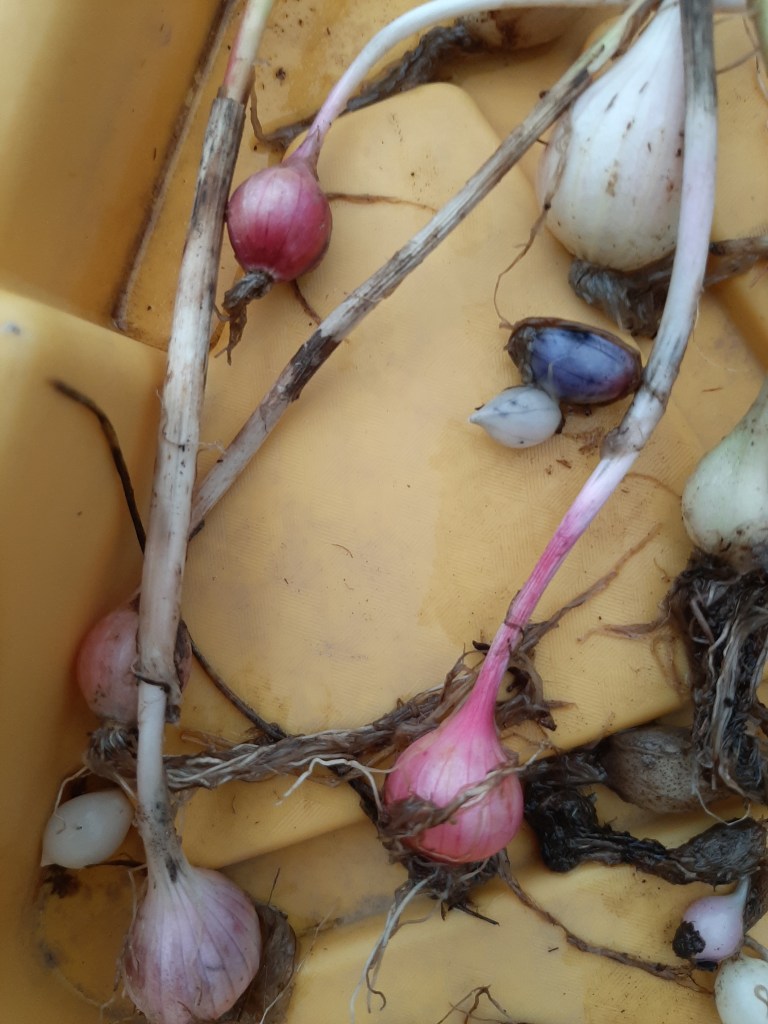
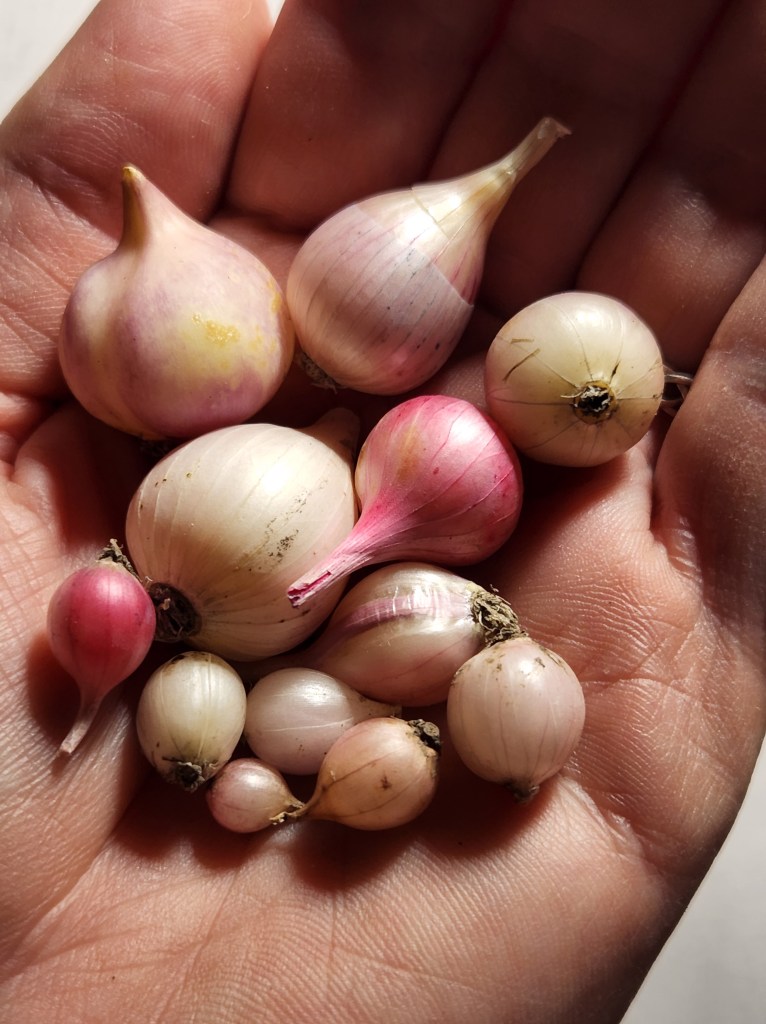
In early July I finally trimmed the flower stalks to save any viable seed, separated and cleaned the bulbs, let them dry fully, and sorted them by type.
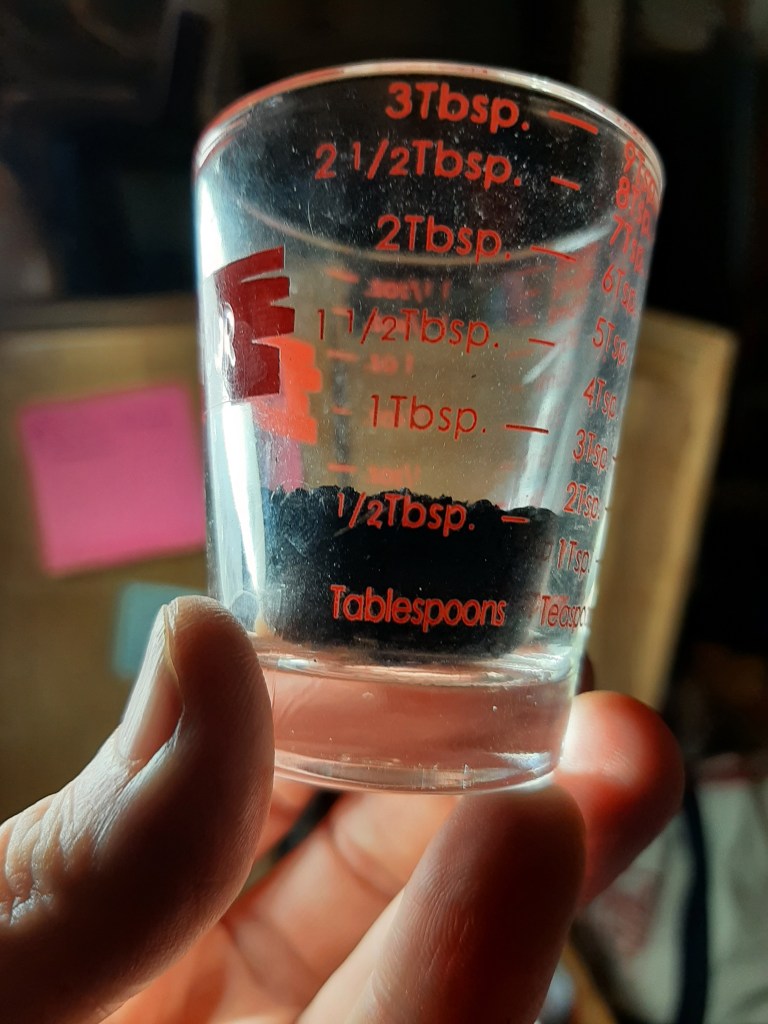
After “shake in a plastic container” threshing and winnowing out on the back lawn, it appears the wild onion plants I collected produced a half tablespoon of “Spokane wild onion” seed. That’s not a lot. Until you think about how many onion seeds will fit in a teaspoon and a half…. I am hoping that means lots more wild onions in my future!
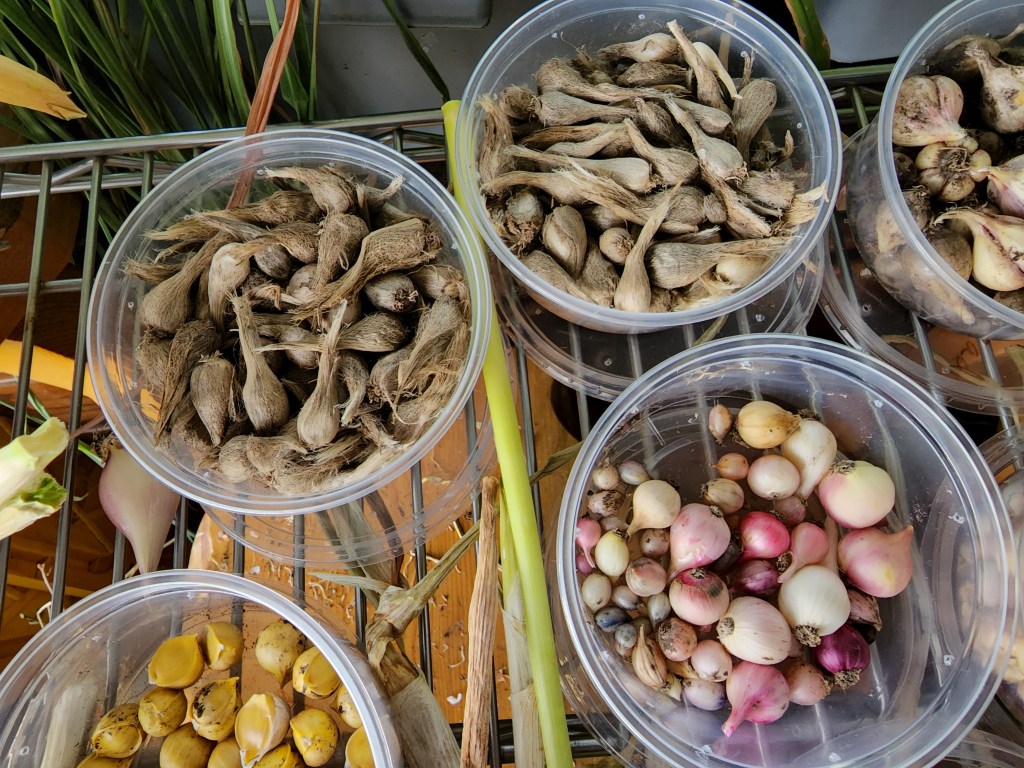
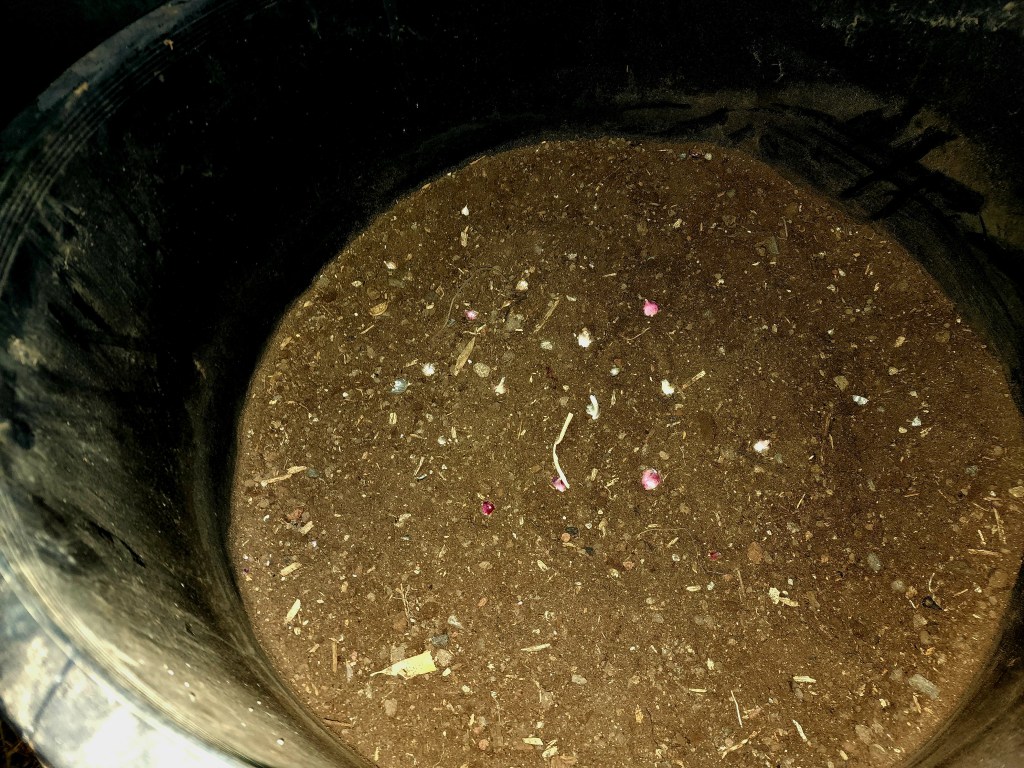
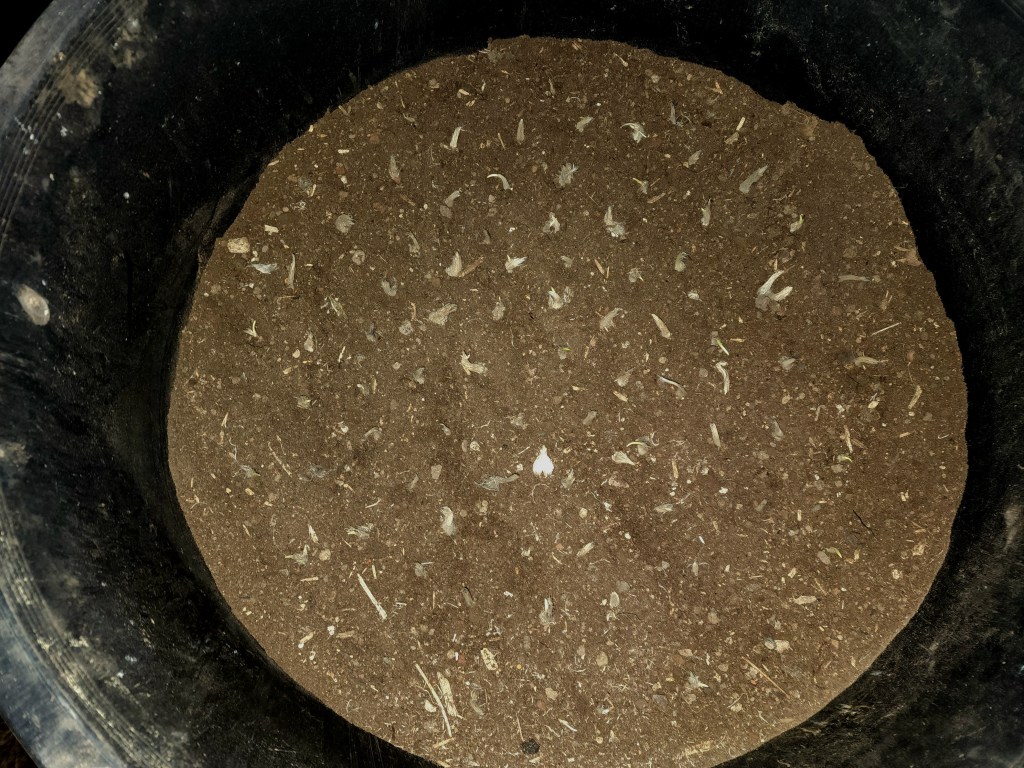
They hung out in those small foodservice tubs (with a few holes poked to allow them to breathe) until I finally had time to plant them up in huge nursery pots in mid November. I can’t wait to see how they survive our winter, whether they flower next spring and if the seed will sprout once I get it seeded!
Now if I could just forage a bulb or two or ten of nodding onion….
A few informative resources from identifying the onions:
https://www.americansouthwest.net/plants/wildflowers/allium-geyeri.html
https://turnbullflora.ewu.edu/Amaryllidaceae/Allium%20geyeri.html
https://turnbullflora.ewu.edu/Amaryllidaceae/Allium%20columbianum.html
Allium geyeri var. geyeri
Allium columbianum


You must be logged in to post a comment.